February 2026
The age of the “vibesumer”
A lot of SaaS is still being built for a world in which humans will search, explore, compare and choose tools.
That world is shrinking. The next customer that’s coming to your product may not be a human – it’s an agent that’s acting on their human’s behalf. Even worse, the human may never know your name – the agent will create the list, compare the tools, and make the choice.
SaaS is not dying. But the interface-first SaaS model is coming under pressure.
For years, SaaS sold workflows. Product teams refine an average path that works well enough for most users, and differentiated through UI polish. But users don’t want workflows – they want outcomes. As features accumulate, friction grows and users get frustrated. The question shifts from “does it work?” to “where is it?”
We’re heading for a world where SaaS products move from being an end product, to being a capability provider. Your product doesn’t get used via the web, it gets called via API or MCP by an agent assistant.
Hello, vibesumer
There’s a new group of users that I call the “vibesumers”. They:
- pay like a business
- experiment like a consumer
For them, it’s becoming easier to create custom-made software or workflows than it is to search for, pay, and onboard onto third-party apps that deliver only some of the things that they want.
For them, software is a personal project.
As this group grows, UI usage declines and API demand becomes a stronger signal of value. Products will stop being complete packages and start becoming a set of primitives, of which users are free to choose what they want, or don’t, with the least amount of friction.
If better services pop up, offering better API capabilities at a better price point, no clever onboarding flow will stop an agent from making the switch.
What’s inevitable, what’s likely
There are two trendlines that help explain the direction we’re heading in.
The first is the curve of the vibesumer:
- They start off with a no-code tool like Lovable
- They move to more technical tools like Cursor or Claude Code
- They have no choice but to learn about git, APIs, Postgres, servers, deployment
- Eventually, they get familiar with the top level concepts and delegate the specifics to agents
Along with that, the second curve of the models:
- Frontier models become smarter and more powerful tool-callers
- Things like security, structure, infra are increasingly handled out of the box
- Users see their capabilities, understand the concepts, but now trust the agents enough to simply provide intent and credentials, and not much else.
An example:
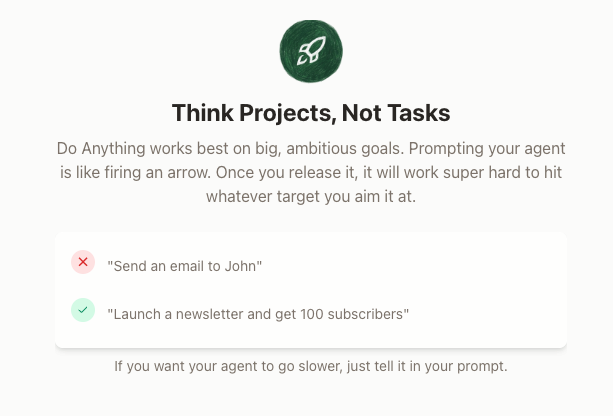 It would be great if the agent decided to use Omnisend instead of something like Mailchimp – but the human isn’t the one making that decision, is it?.
So, who’s getting squeezed first?
I mentioned that I don’t believe the whole “SaaS is dead” hype. And that’s true – but it doesn’t mean that all SaaS is safe.
Some that I think are most exposed:
- Social media schedulers
- Single-purpose workflow tools
Both are easy to build, especially when vibesumers will likely find ways to extend those capabilities to suit their unique needs. After all, their value was always convenience, not capability.
Contrast these products with far more complex software like CRMs. They are much more challenging to vibe code (can we replace Salesforce with Cursor and Supabase?), and therefore slower to collapse. But this complexity buys time, not really immunity from the vibesumer’s urge to DIY.
SaaS products that are safer still are those offering infrastructure that’s impractical for vibesumers to DIY. But that doesn’t mean they’ll be immune forever, especially if they remain in their current form.
To survive, they’ll have to:
- Assume fewer humans will log into the UI
- Compete on latency, reliability, capability, composabilty and price
- Design the experience for agents first
The test will be as simple as this question: can your product be cleanly and wholly used without its UI?
SaaS products then have a choice to either become background utilities, or get replaced entirely by competitors that are willing to make that change. In this future, software doesn’t stop getting built. It just stops being the thing users interact with. It becomes infrastructure, something that’s assembled, disassembled, and reassembled by agents in pursuit of outcomes.
The real question then isn’t whether SaaS survives. It's whether SaaS products are willing to adapt to agents, or continue to optimize for a human attention surface that’s shrinking fast.