February 2026
The complacency zone
The most dangerous place in your career is not failure. It’s not the competitive bottom where you’re fighting for growth with all the other juniors. It’s actually closer to the top: stable competence without much friction. It’s confidence that has rotted into complacency and eventual decay.
You’ve fought many years to get to where you are. You’ve earned the accolades. You walk into a room with all the confidence that those years have wrought out of you; you know the answer before they ask the question.
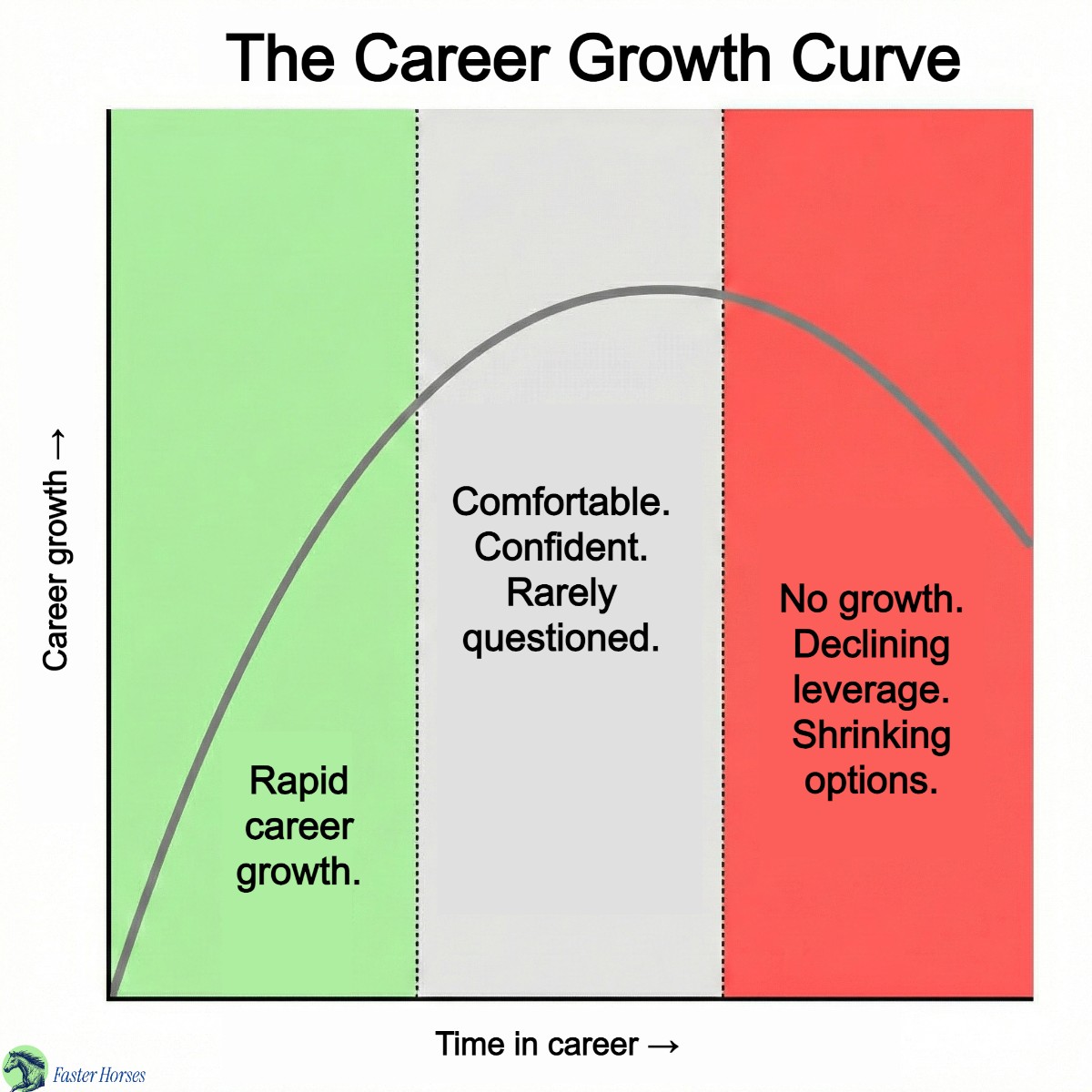 The core stages of your career growth
But the friction slowly disappears. You enter new problems with zero doubt and fall back to your playbook. You confuse repetition for mastery. And because you’re good, no one challenges you. You believe you’re hard to replace, but you haven’t offered anything new in a long time.
Leaving gaps
The other side of complacency is maintaining your territory.
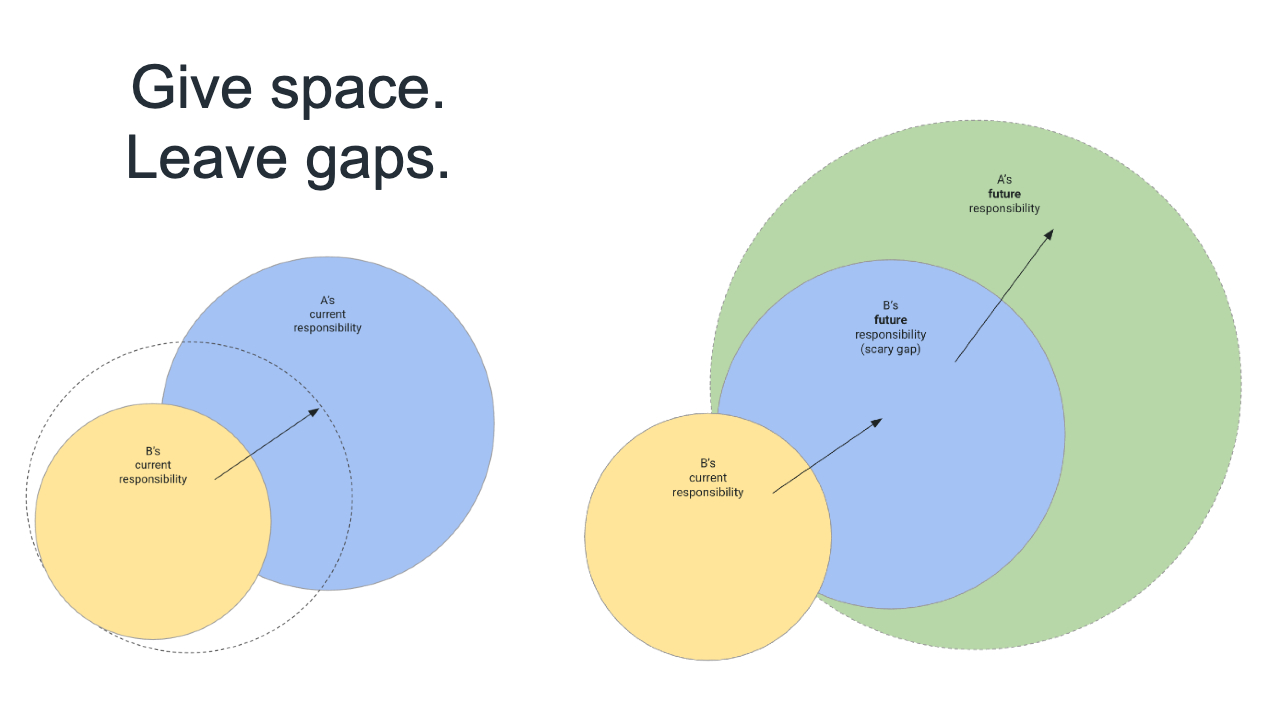
When you’ve spent so much time building your expertise, influence and scope, it’s natural for you to want to protect it. You did the work and earned that territory, and you know it better than anyone. So you cling to it.
You stay close to the work that you’re good at. You’d rather not relinquish responsibility and so you become the bottleneck for key decisions because you believe you can make them better than anyone else.
But something else is happening.
You’re preventing others down the line from growing.
 Make room
When seniors hoard existing scope, juniors begin to stagnate. Mid-career folks are asking for more responsibility and they can’t find any.
Your team begins to stagnate, because they’re learning that growing means accumulating territory and refusing to give it up.
You don’t just block others. You end up blocking yourself. If you don’t leave some space for others to take over what you’ve already mastered, you don’t create room for yourself to master new skills.
Your “hard-earned” competence becomes self-entrapment.
The peak-career theft
There’s a window in which three rare things peak at the same time: cognitive output, credibility & visibility, and optionality. You’re now senior enough to be taken seriously, capable enough for new skills and established enough to take big bets without serious downside.
But that window doesn’t last forever.
Over time, identity hardens and your risk tolerance drops. Opportunities shrink as the market associates you with what you’ve already done.
The plateau is sneaky because it looks so much like stability. After all, you now make good money. You’re respected at work. You’re efficient, and trust is assumed.
But ask yourself:
- When was the last time you felt uncomfortable in your role?
- When was the last time someone in your team did something better in a domain you once owned?
- Compare this year to yourself last year – what’s fundamentally changed?
The danger isn’t really failure. The danger is inertia: becoming a manager of obsolete functions; of a team that stagnates. And personally, your optionality fades because the market doesn’t pay for what you once mastered.
It pays for what you’re going to master next.